


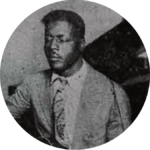
Blind Willie Johnson never recorded the blues, but the Texas guitar evangelist’s music has enraptured a multitude of blues fans and musicians for nearly a century. His genre has come to be called “holy blues” for its similarities to the blues format, its intensity and the superb slide guitar technique. “The Soul of a Man,” an episode in Martin Scorsese’s documentary series ”The Blues,” was named after a 1930 Johnson record and featured bluesman Chris Thomas King portraying Johnson—and actor Laurence Fishburne voicing Johnson in the scripted narration. And when the Voyager 1 and 2 space probes were launched in 1977, they each carried a recording, “The Sounds of Earth,” with audio tracks including Johnson’s “Dark Was the Night—Cold Was the Ground.”
He was born Willie Johnson Jr, on January 25, 1897, in Pendleton, Texas, according to information he supplied when he registered for the World War I draft in Houston, although different dates and birthplaces have been cited elsewhere. Blinded as a child, reportedly by his stepmother, he took up guitar and based some of his music on hymns he learned in church in Marlin, Texas. Playing streetcorners, churches, and revivals with a tin cup tied to his guitar for tips, he befriended other blind street musicians and traveled through Texas and beyond.
He first recorded in Dallas for Columbia in 1927. The company hailed his music as “nothing like anything else” in advertisements, and he became one of the most popular Black recording artists of the era until the Depression hit the record industry, and he never recorded after 1930. He met blues and gospel guitarist Blind Willie McTell at a Columbia session in Atlanta and the pair traveled and performed together, according to McTell. A preacher who knew him recalled Johnson once playing on one street corner while the legendary Blind Lemon Jefferson was playing on another. In addition to his itinerant performing career the pious Johnson also pastored his own churches as Reverend W.J. Johnson at times.
Among his best known recordings were “Mother’s Children Have a Hard Time” (aka “Motherless Children”), “It’s Nobody’s Fault But Mine,” “John the Revelator,” “Jesus Make Up My Dying Bed,” “Lord I Just Can’t Keep From Crying,” Keep Your Lamp Trimmed and Burning,” “God Moves on the Water,” and “Let Your Light Shine on Me.” Most were religious but he also delivered morality messages and topical songs—but not blues per se. Even so, “Dark Was the Night,” which he hummed and moaned without actual lyrics, was selected as a Classic of Blues Recording by the Blues Hall of Fame in 1999. Many blues, folk and rock stars later recorded songs from the Johnson repertoire including Son House, Bob Dylan, Eric Clapton and Led Zeppelin. The 2016 Alligator CD “God Don’t Never Change: The Songs of Blind Willie Johnson” featured interpretations by Tom Waits, Lucinda Williams, Rickie Lee Jones, the Blind Boys of Alabama and others.
Johnson’s vocals often erupted into harsh, raspy declamations, sometimes enhanced by the sweet phrases sung by Willie B. Richardson. Later known as Willie B. Harris, she and another woman, Angeline Johnson, both claimed to have married Johnson and provided much of what we know about him. Angeline (aka Angilena, Anna, Anna Bell, Annie or Antonia in various documents) was the older sister of blues steel guitarist L.C. “Good Rockin’” Robinson, who cited Johnson as an early influence. Johnson died September 18, 1945, of malarial fever after a fire destroyed his home and House of Prayer church in Beaumont. The Texas Historical Commission placed a marker at the site in 2010.